
Performance
Construction
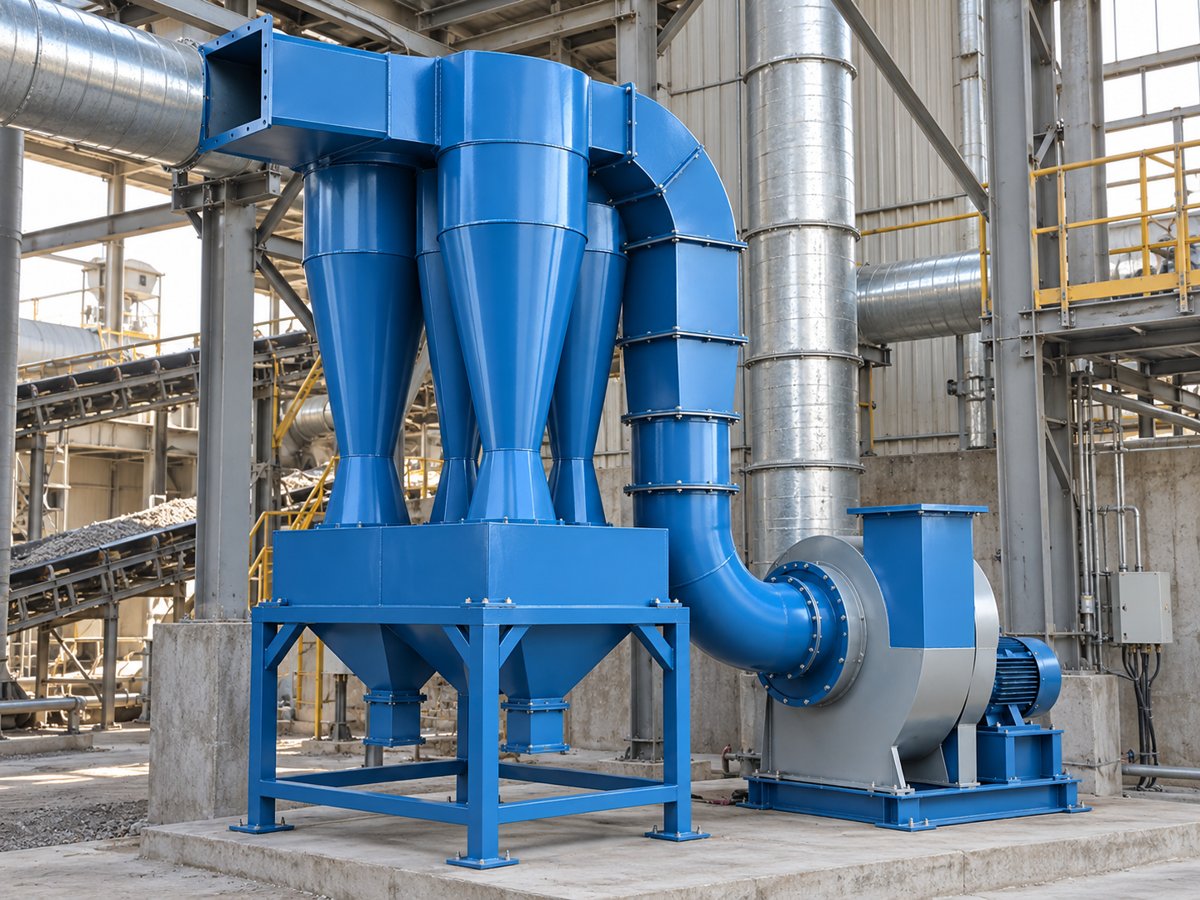
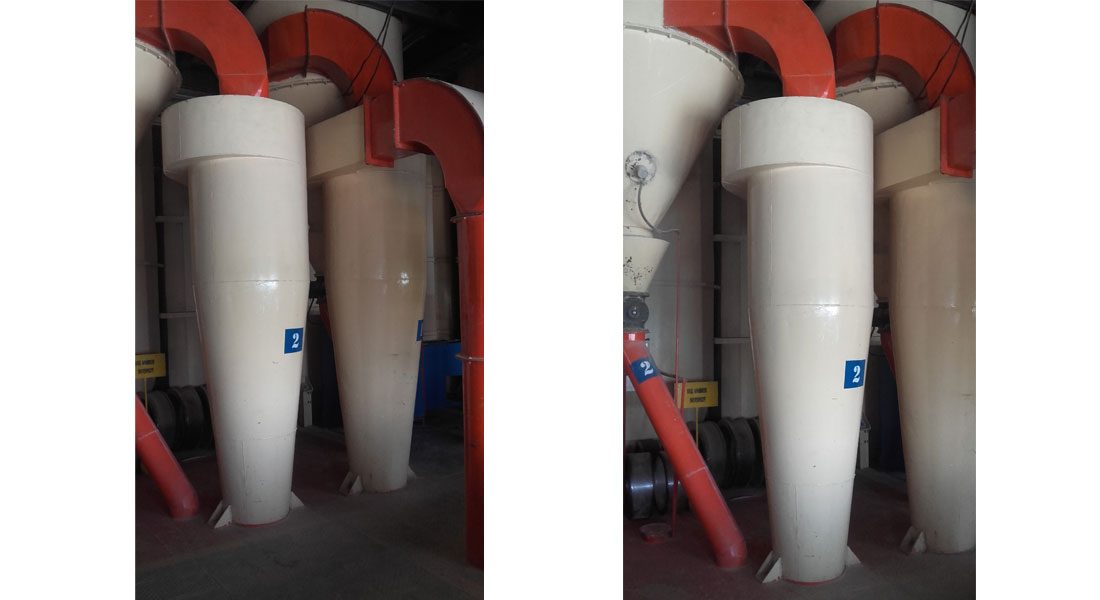
The cyclone tubes can be constructed of steel or cast iron. The outer housing is sheet metal construction, and a hopper with rotary air lock valve is included. Cast iron tubes are used where the dust is abrasive, as on bagasse and coal fired boilers.
Where it is used
Boiler
A boiler house runs on draft. The FD fan pushes combustion air through the air heater into the windbox, the PA fan carries pulverised fuel from the mill to the burners, and the ID fan pulls the flue gas through the economiser, air heater and dust collector to the stack. The ID fan sees the worst duty: hot gas, fly ash and a pressure that rises as the filter loads. Bag filters or multiclones sit ahead of it, and silencers on the FD inlet keep the boiler house within noise limits.
Sugar
Sugar mills fire bagasse, a wet, fibrous fuel that produces a heavy fly ash load. The boiler fan set (ID, FD, SA and PA) is sized for bagasse's high moisture and the seasonal run, and the ID fan impeller is built for erosion. Wet scrubbers or multiclones clean the flue gas before the stack, and ventilation fans handle the heat in the mill house and pan floor.
Cement & Lime
A cement line is a chain of fans. The preheater fan sets the kiln draft, the raw mill fan draws hot kiln gas through the mill to dry the meal, the cooler compartment fans blow air up through the clinker bed, the cooler vent fan exhausts the surplus, and the coal mill fan carries pulverised coal to the burner. Air slide blowers move meal and cement around the plant. Every one of these handles abrasive dust, so radial tipped and wear-protected backward curved impellers are the norm, with bag filters or multiclones on each exhaust.
Coal Handling
Coal handling plants raise dust at every crusher, screen and transfer point. Dust extraction fans draw the air into bag filters and cyclones, and the whole system is built spark resistant. Seal air blowers on the mills keep coal dust out of the bearings.
By process
The same duty, selected for the gas of each process.
Information needed to select or quote
- Gas volume and temperature. Actual flow at the inlet, normal and upset temperature, moisture.
- Dust or pollutant. Inlet loading, particle size distribution, whether it is abrasive, sticky, hygroscopic or combustible; for gases, the species and concentration.
- Required outlet. The emission limit or clean gas concentration the unit must meet.
- Site. Available space and height, material of construction preferences, and how the collected material is to be discharged.