
How it works
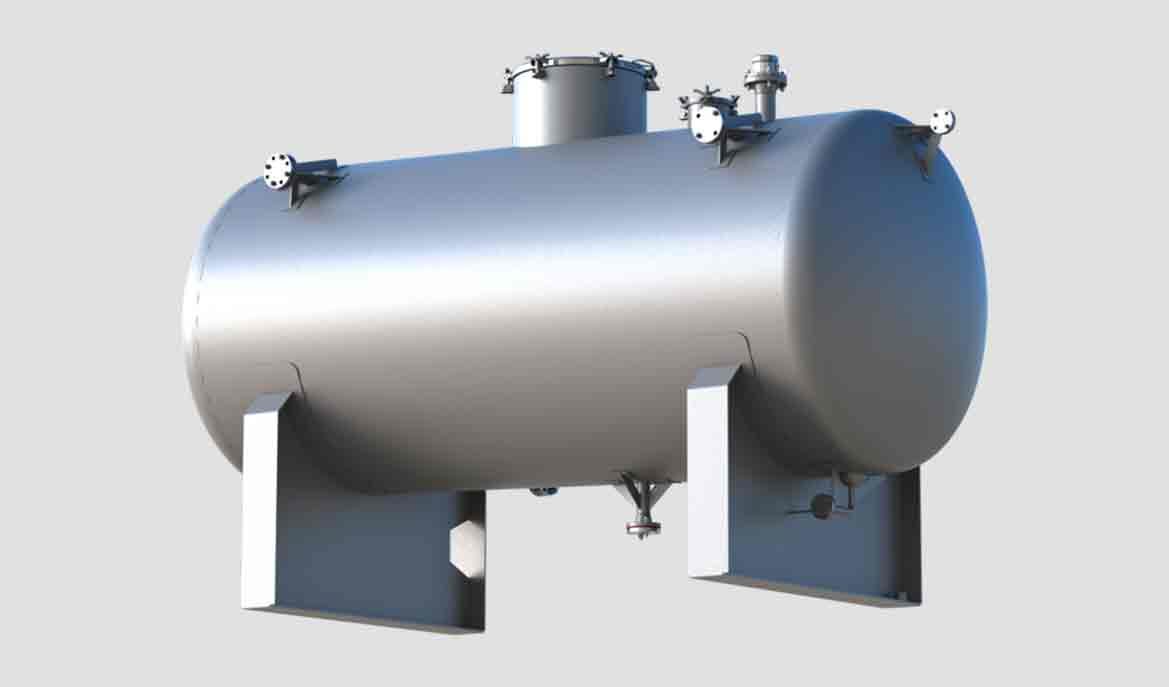
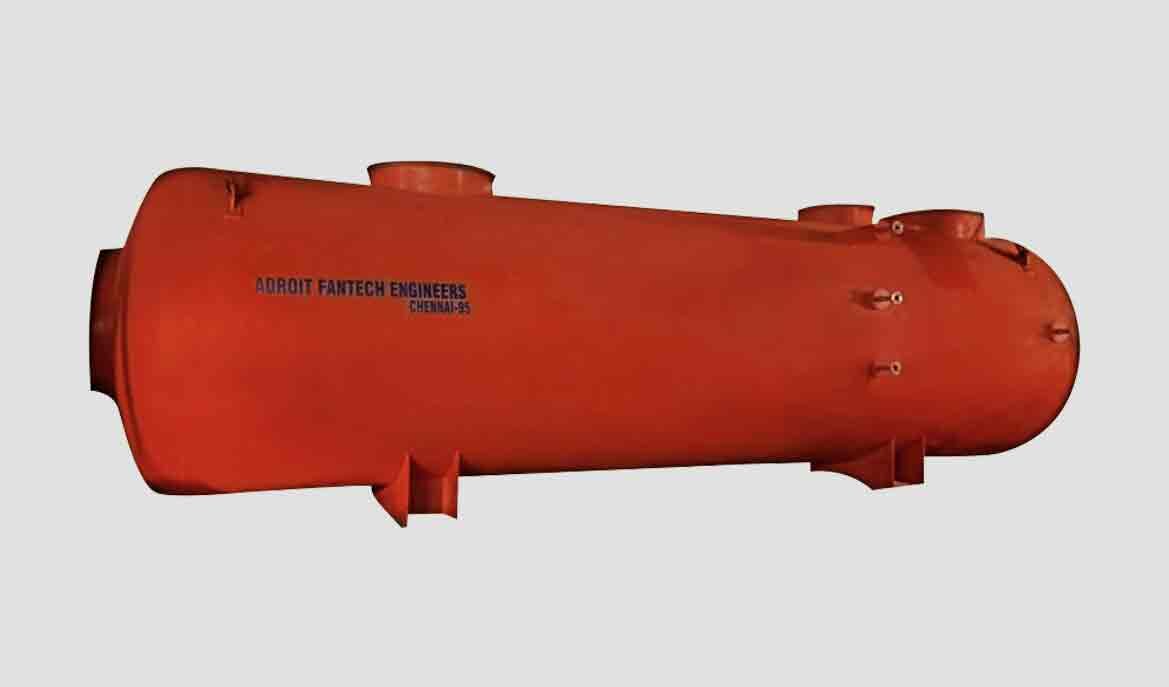
A Schoepentoeter at the inlet reduces the velocity and distributes the incoming mixture across the vessel cross-section. A mesh pad in the upper section aids separation and prevents liquid carry-over: the pad traps entrained liquid droplets and allows them to coalesce until they are large enough to fall through the up-flowing vapour to the bottom of the vessel. The vapour exits through a gas outlet at a design velocity which minimises the entrainment of any liquid droplets as it leaves the vessel.
Where it sits
Downstream of a wet scrubber to keep carry-over out of the fan and stack; ahead of a compressor or MVR blower to protect the impeller; and on process lines where liquid slugs must be removed from a gas stream.
Applications
| Application | What it does | Type usually selected |
|---|---|---|
| Mist Eliminator | Separates entrained liquid droplets from a vapour or gas stream, ahead of a compressor, a fan or a stack. | Demister Knockdown Vessel |
Where it is used
Incinerators
Waste incinerators need an ID fan that holds the furnace under draft through the quench, the scrubber and the bag filter, on gas that is hot, wet and corrosive. Dilution air blowers cool the flue gas, wet scrubbers take out acid gas, and adsorption towers on activated carbon remove dioxins and mercury before the stack.
Oil & Gas
Refineries and gas plants use fans on fired heaters and boilers (FD and ID), on flare and vent systems (vent silencers on relief and blow-down lines), and on process vessels where a knock-out drum separates liquid from vapour ahead of a compressor. Explosion-proof motors and spark-resistant construction are standard.
Chemical & Pharma
Chemical plants exhaust corrosive fumes from reactors, dryers and storage into wet scrubbers, with fans in stainless steel, PP-FRP or rubber-lined construction. Pharma plants add clean-room supply through AHUs with pre, fine and HEPA filtration, and solvent recovery through adsorption towers. MVR blowers recompress vapour on evaporators and effluent plants.
Paper
Paper mills use fans in the dryer section hood (supply and exhaust of hot, humid air), on the boiler (ID, FD), and for fume and dust extraction in the pulp and finishing areas. Stainless steel construction handles the moisture in the hood exhaust.
Surface Coating
Painting, powder coating and galvanising lines exhaust solvent vapour, overspray and acid fume. Booth exhaust fans in stainless steel or FRP feed wet scrubbers or adsorption towers, ovens use hot air fans, and pickling tanks need fume extraction with mist eliminators.
Dyeing Industries
Dyeing and textile processing houses use fans on stenters and dryers (hot, humid exhaust), on the boiler, and for shop floor ventilation. Stenter exhaust carries oil mist and lint, so the fan and duct are built for cleaning access.
Information needed to select or quote
- Gas volume and temperature. Actual flow at the inlet, normal and upset temperature, moisture.
- Dust or pollutant. Inlet loading, particle size distribution, whether it is abrasive, sticky, hygroscopic or combustible; for gases, the species and concentration.
- Required outlet. The emission limit or clean gas concentration the unit must meet.
- Site. Available space and height, material of construction preferences, and how the collected material is to be discharged.