
Filter media
Fabric filters are offered in polyester, polypropylene, Ryton and Nomex, selected for the gas temperature, moisture and the chemical nature of the dust.
Types
| Conventional bag with cage | Round bags supported on a wire cage, cleaned by reverse pulse. The standard form for high dust loads and large volumes. |
| Pleated bags | More filter area in the same housing, so a smaller unit or a lower filtration velocity for the same duty. |
| Pleated cartridges | Compact elements for fine, light dust at moderate volume, with quick change-out. |
Design
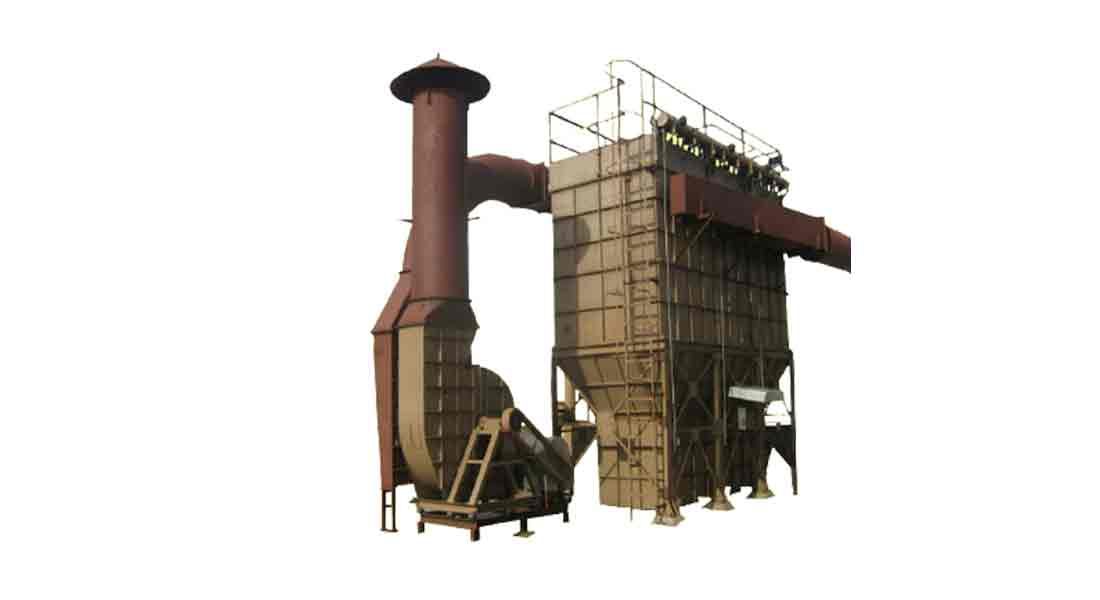
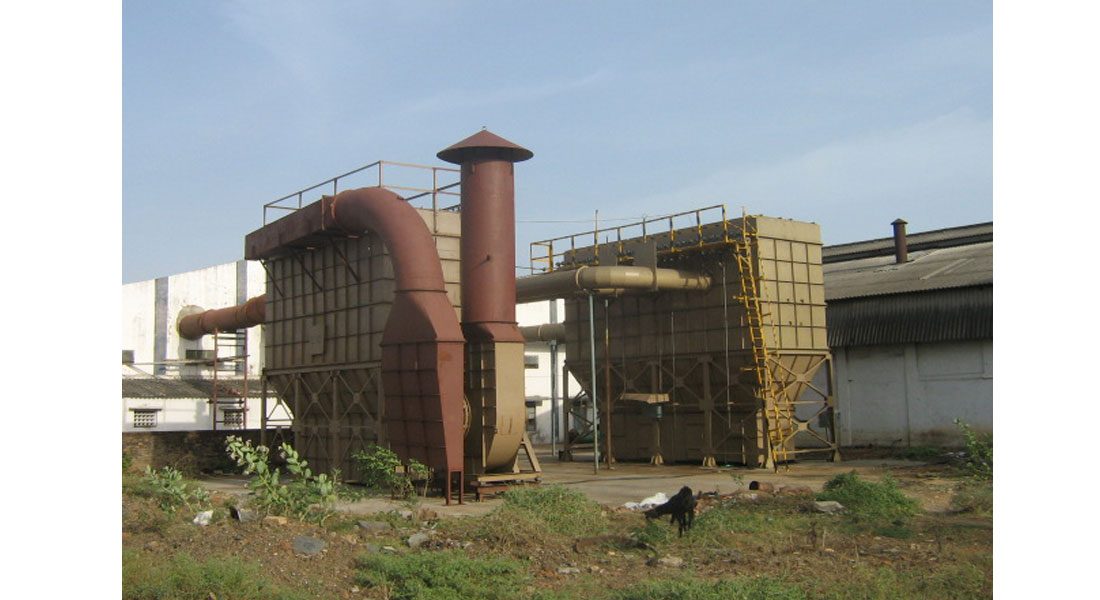
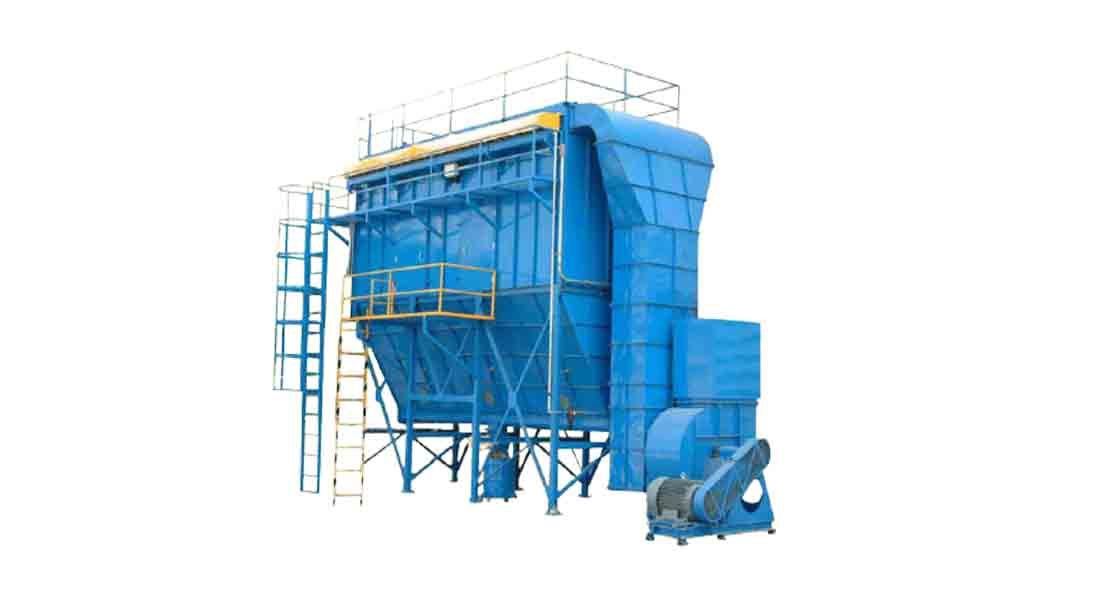
- The can velocity is well maintained in order to allow the dust to settle down inside the bag house.
- The compressed air for pulsing is designed for maximum cleaning with low compressed air capacity and pressure, to conserve energy.
- Collected dust is discharged through a hopper with a rotary air lock valve or screw conveyor.
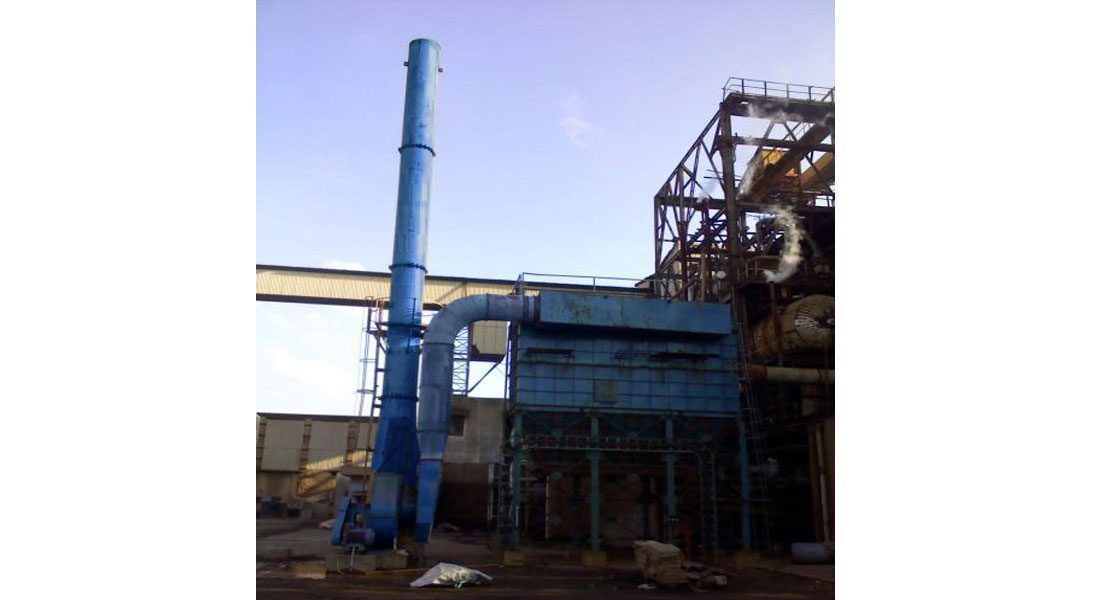
- The fan behind the filter is a bag filter fan on the clean side, with the filter pressure drop added to the duty.
Where it is used
Boiler
A boiler house runs on draft. The FD fan pushes combustion air through the air heater into the windbox, the PA fan carries pulverised fuel from the mill to the burners, and the ID fan pulls the flue gas through the economiser, air heater and dust collector to the stack. The ID fan sees the worst duty: hot gas, fly ash and a pressure that rises as the filter loads. Bag filters or multiclones sit ahead of it, and silencers on the FD inlet keep the boiler house within noise limits.
Cement & Lime
A cement line is a chain of fans. The preheater fan sets the kiln draft, the raw mill fan draws hot kiln gas through the mill to dry the meal, the cooler compartment fans blow air up through the clinker bed, the cooler vent fan exhausts the surplus, and the coal mill fan carries pulverised coal to the burner. Air slide blowers move meal and cement around the plant. Every one of these handles abrasive dust, so radial tipped and wear-protected backward curved impellers are the norm, with bag filters or multiclones on each exhaust.
Power
Thermal power stations use the full boiler fan set at the largest sizes: ID fans on the flue gas after the ESP, FD fans for secondary air, PA fans for mill air, and seal air blowers to keep pulverised coal out of the mill bearings. Coal handling plants add dust extraction fans on the crushers and transfer points, with bag filters and cyclones on the collected air.
Iron & Steel
Pig iron and steel plants need fans for the blast furnace stove, the sinter plant, the coke oven and the fume extraction over converters and electric arc furnaces. Combustion air blowers feed the stoves and reheating furnaces. Fume exhaust fans handle hot, dust-laden gas from the melt shop into bag filters. ID fans on the sinter strand and the boiler are built for abrasive dust and high temperature.
Non Ferrous Metal
Ferro alloy, aluminium and copper plants run submerged arc and reverberatory furnaces whose fumes carry fine metallic dust and, in some processes, acid gas. Fume exhaust fans pull the furnace gas into bag filters or wet scrubbers, ID fans handle the boiler and dryer gas, and combustion air blowers serve the furnaces. Stainless steel or lined construction is common on the scrubber side.
Incinerators
Waste incinerators need an ID fan that holds the furnace under draft through the quench, the scrubber and the bag filter, on gas that is hot, wet and corrosive. Dilution air blowers cool the flue gas, wet scrubbers take out acid gas, and adsorption towers on activated carbon remove dioxins and mercury before the stack.
Fertilizer
Fertilizer plants handle dust from granulators, dryers and coolers, and fumes such as ammonia and fluorides from reactors. Bag filters take the dust, wet scrubbers take the gas, and the fans behind them are built in stainless steel or lined construction. High pressure blowers serve the dryer and cooler drums.
Glass
Glass furnaces need combustion air at steady pressure, cooling air on the furnace structure, and high pressure blowers for forming and annealing. Fume exhaust from the regenerators is hot and carries batch dust, and goes to a bag filter with a dilution air blower ahead of it.
Ceramic
Tile, sanitaryware and refractory plants run spray dryers, kilns and glazing lines. Hot air fans recirculate kiln air, ID fans exhaust the kiln and spray dryer, and dust extraction fans with cyclones and bag filters clean the air from presses and glazing booths.
Driers
Rotary, fluid bed, spray and belt dryers all need a hot air fan to push heated air into the product and an exhaust fan to pull the moist, dust-laden air out through a cyclone or bag filter. The exhaust fan is sized at the hot, wet condition, and axial fans are used where the pressure is low.
Tobacco
Tobacco processing generates fine dust from cutting, drying and blending. Bag filter fans on the dust extraction system are the main duty, with cyclones as pre-collectors. Dryer exhaust and general ventilation complete the set.
Food Processing
Food plants need stainless steel fans for dryer and oven exhaust, dust extraction on milling and mixing with bag filters, and ventilation and AHUs that hold the processing area at the required temperature and air quality.
Coal Handling
Coal handling plants raise dust at every crusher, screen and transfer point. Dust extraction fans draw the air into bag filters and cyclones, and the whole system is built spark resistant. Seal air blowers on the mills keep coal dust out of the bearings.
Automobile
Vehicle plants use fans on paint shop supply and exhaust, on ovens and dryers, on welding fume extraction, and for plant ventilation. Paint booth exhaust goes through wet scrubbers or adsorption towers for solvent; oven exhaust needs a hot air fan; the body shop needs fume extraction into bag filters.
Tyre
Tyre plants generate carbon black dust in mixing, rubber fume in curing, and heat everywhere. Bag filter fans on the carbon black handling system, fume exhaust on the curing presses, and heavy ventilation across the plant are the main duties.
Shipbuilding
Shipyards need portable and fixed ventilation for confined-space work inside hulls and tanks, welding fume extraction, and exhaust for blasting and painting halls with dust collection and scrubbing.
Information needed to select or quote
- Gas volume and temperature. Actual flow at the inlet, normal and upset temperature, moisture.
- Dust or pollutant. Inlet loading, particle size distribution, whether it is abrasive, sticky, hygroscopic or combustible; for gases, the species and concentration.
- Required outlet. The emission limit or clean gas concentration the unit must meet.
- Site. Available space and height, material of construction preferences, and how the collected material is to be discharged.