
Types
| Type | How it works | Used for |
|---|---|---|
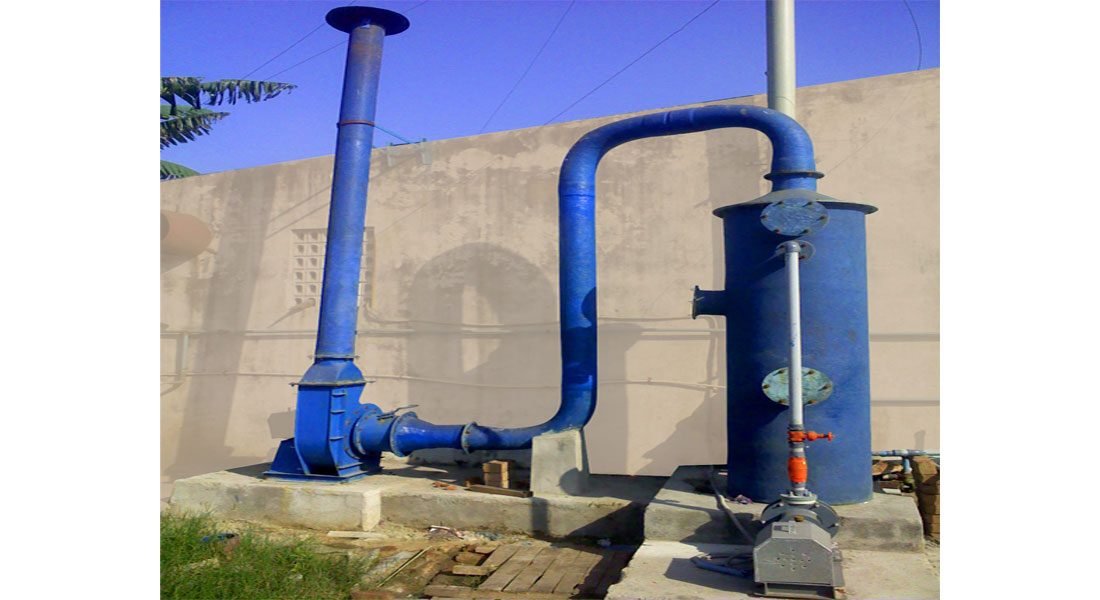
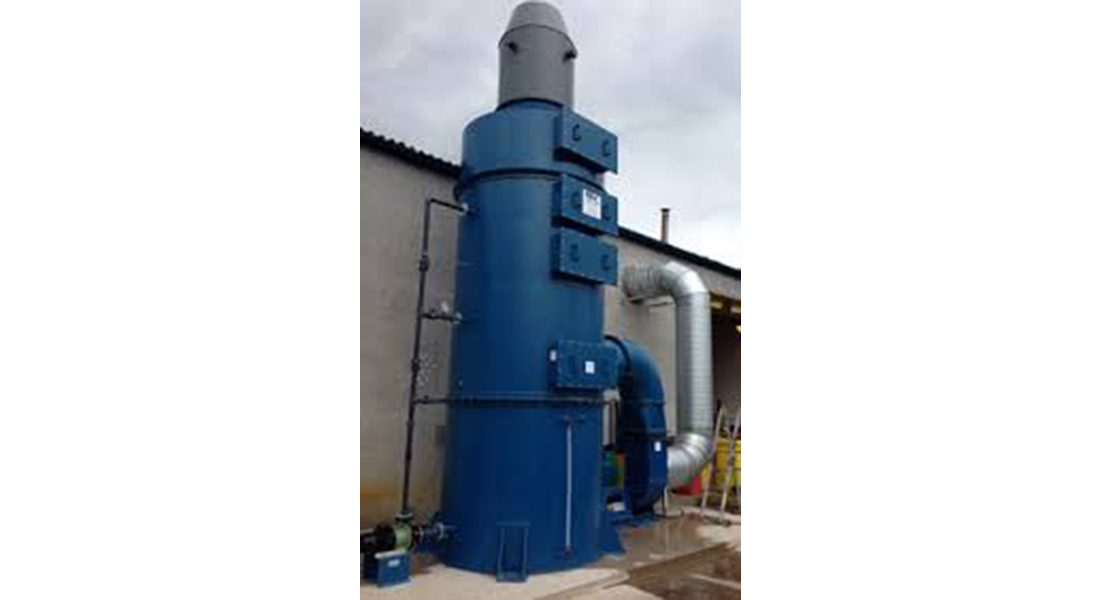
| Static wet scrubber | Gas passes through a wetted static element, without spray pumps or packing. | Light dust and mist at low pressure drop |
| Spray tower | Gas rises through a tower against a curtain of liquid sprayed from nozzles. | Gas cooling and coarse dust; acid gas absorption |
| Packed bed column | Gas and liquid meet over a bed of packing that gives a large wetted surface. | Absorption of gases such as acid fume and ammonia |
| Venturi scrubber | Gas is accelerated through a throat where the liquid is atomised into fine droplets that capture the dust. | Fine and sub-micron dust, high efficiency at higher pressure drop |
| Cyclonic spray scrubber | Spray in a cyclonic body; the swirl throws the wetted particles to the wall and separates the droplets from the gas. | Dust and mist where the outlet must be dry |
Design
Adroit manufactures high efficiency scrubbers with minimum maintenance, low liquid consumption and higher entrapment of mist at the outlet. A mist eliminator at the outlet keeps carry-over out of the fan and the stack.
Construction
Scrubbers can be constructed of steel, stainless steel, PP-FRP or steel rubber lined, depending on the gas to be handled. The fan downstream of a scrubber handles saturated gas and is built in the same material.
Where it is used
Sugar
Sugar mills fire bagasse, a wet, fibrous fuel that produces a heavy fly ash load. The boiler fan set (ID, FD, SA and PA) is sized for bagasse's high moisture and the seasonal run, and the ID fan impeller is built for erosion. Wet scrubbers or multiclones clean the flue gas before the stack, and ventilation fans handle the heat in the mill house and pan floor.
Iron & Steel
Pig iron and steel plants need fans for the blast furnace stove, the sinter plant, the coke oven and the fume extraction over converters and electric arc furnaces. Combustion air blowers feed the stoves and reheating furnaces. Fume exhaust fans handle hot, dust-laden gas from the melt shop into bag filters. ID fans on the sinter strand and the boiler are built for abrasive dust and high temperature.
Non Ferrous Metal
Ferro alloy, aluminium and copper plants run submerged arc and reverberatory furnaces whose fumes carry fine metallic dust and, in some processes, acid gas. Fume exhaust fans pull the furnace gas into bag filters or wet scrubbers, ID fans handle the boiler and dryer gas, and combustion air blowers serve the furnaces. Stainless steel or lined construction is common on the scrubber side.
Incinerators
Waste incinerators need an ID fan that holds the furnace under draft through the quench, the scrubber and the bag filter, on gas that is hot, wet and corrosive. Dilution air blowers cool the flue gas, wet scrubbers take out acid gas, and adsorption towers on activated carbon remove dioxins and mercury before the stack.
Chemical & Pharma
Chemical plants exhaust corrosive fumes from reactors, dryers and storage into wet scrubbers, with fans in stainless steel, PP-FRP or rubber-lined construction. Pharma plants add clean-room supply through AHUs with pre, fine and HEPA filtration, and solvent recovery through adsorption towers. MVR blowers recompress vapour on evaporators and effluent plants.
Fertilizer
Fertilizer plants handle dust from granulators, dryers and coolers, and fumes such as ammonia and fluorides from reactors. Bag filters take the dust, wet scrubbers take the gas, and the fans behind them are built in stainless steel or lined construction. High pressure blowers serve the dryer and cooler drums.
Ceramic
Tile, sanitaryware and refractory plants run spray dryers, kilns and glazing lines. Hot air fans recirculate kiln air, ID fans exhaust the kiln and spray dryer, and dust extraction fans with cyclones and bag filters clean the air from presses and glazing booths.
Automobile
Vehicle plants use fans on paint shop supply and exhaust, on ovens and dryers, on welding fume extraction, and for plant ventilation. Paint booth exhaust goes through wet scrubbers or adsorption towers for solvent; oven exhaust needs a hot air fan; the body shop needs fume extraction into bag filters.
Surface Coating
Painting, powder coating and galvanising lines exhaust solvent vapour, overspray and acid fume. Booth exhaust fans in stainless steel or FRP feed wet scrubbers or adsorption towers, ovens use hot air fans, and pickling tanks need fume extraction with mist eliminators.
Shipbuilding
Shipyards need portable and fixed ventilation for confined-space work inside hulls and tanks, welding fume extraction, and exhaust for blasting and painting halls with dust collection and scrubbing.
By process
The same duty, selected for the gas of each process.
Information needed to select or quote
- Gas volume and temperature. Actual flow at the inlet, normal and upset temperature, moisture.
- Dust or pollutant. Inlet loading, particle size distribution, whether it is abrasive, sticky, hygroscopic or combustible; for gases, the species and concentration.
- Required outlet. The emission limit or clean gas concentration the unit must meet.
- Site. Available space and height, material of construction preferences, and how the collected material is to be discharged.