
Fan silencers
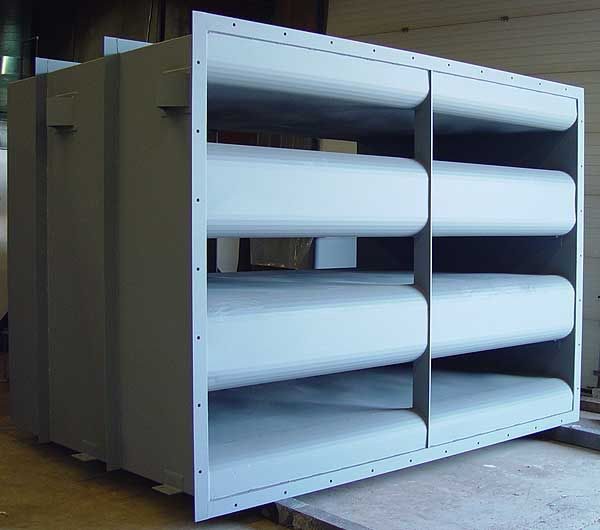
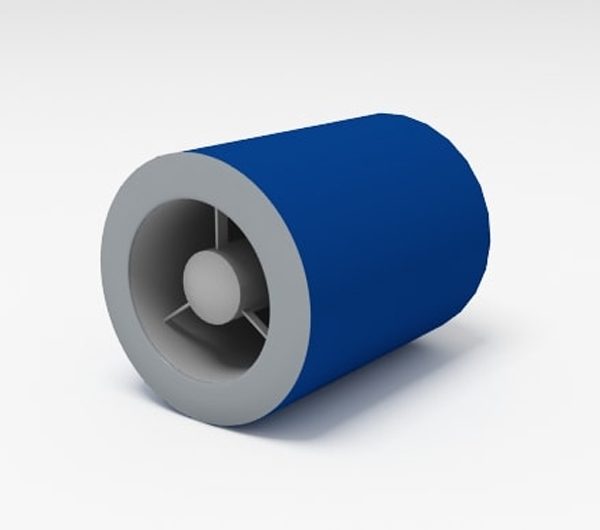
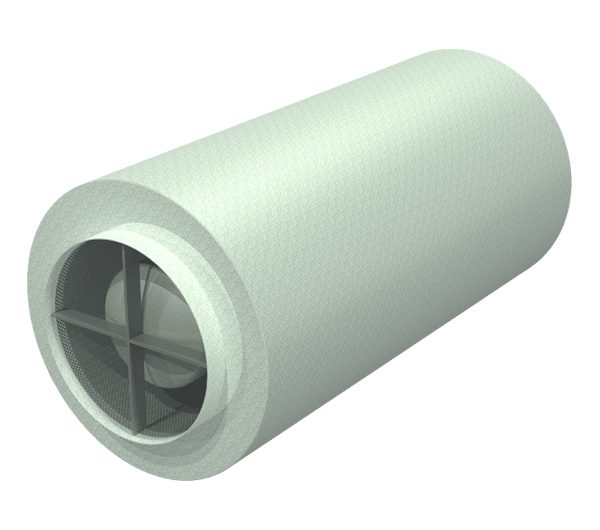
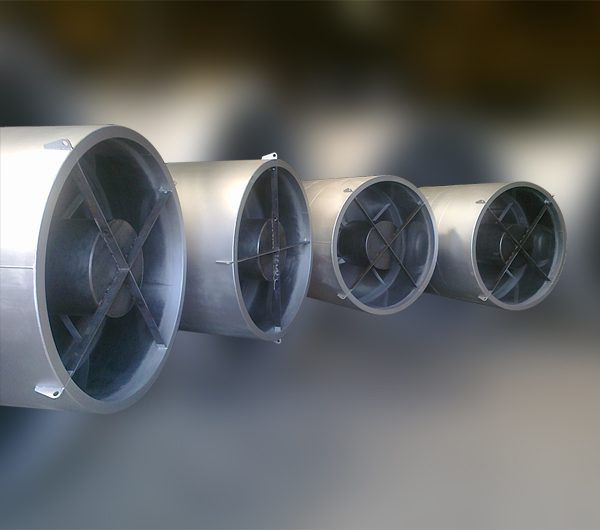
Fan silencers at the inlet and outlet of the fan or in the duct use an absorptive annular flow design which provides high attenuation with minimum pressure loss. They come in tubular (circular), square and rectangular shapes with acoustic enhancements. Material options include mild steel and stainless steel.
Vent silencers
Vent silencers are used to reduce noise levels generated by the expansion of gas or steam from high pressure to atmospheric pressure. They suppress the noise from high velocity gas streams such as steam vents, safety relief valve outlets, blow-down and surge outlets, and can be supplied for horizontal or vertical mounting in mild steel or stainless steel.
Applications
| Application | What it does | Type usually selected |
|---|---|---|
| Fan Silencer | An absorptive silencer at the fan inlet, outlet or in the duct, cutting fan noise with minimum pressure loss. | Silencer |
| Vent Silencer | Cuts the noise from steam or gas expanding from high pressure to atmosphere at safety valve outlets, start-up vents and blow-down lines. | Silencer |
Where it is used
Boiler
A boiler house runs on draft. The FD fan pushes combustion air through the air heater into the windbox, the PA fan carries pulverised fuel from the mill to the burners, and the ID fan pulls the flue gas through the economiser, air heater and dust collector to the stack. The ID fan sees the worst duty: hot gas, fly ash and a pressure that rises as the filter loads. Bag filters or multiclones sit ahead of it, and silencers on the FD inlet keep the boiler house within noise limits.
Power
Thermal power stations use the full boiler fan set at the largest sizes: ID fans on the flue gas after the ESP, FD fans for secondary air, PA fans for mill air, and seal air blowers to keep pulverised coal out of the mill bearings. Coal handling plants add dust extraction fans on the crushers and transfer points, with bag filters and cyclones on the collected air.
Furnaces
Heat treatment, forging and melting furnaces need combustion air blowers sized for the burner pressure, hot air fans for recirculation in the furnace chamber, and exhaust fans on the flue that can live with gas at several hundred degrees. Dilution air blowers bring the flue gas down to a temperature the filter can accept.
Oil & Gas
Refineries and gas plants use fans on fired heaters and boilers (FD and ID), on flare and vent systems (vent silencers on relief and blow-down lines), and on process vessels where a knock-out drum separates liquid from vapour ahead of a compressor. Explosion-proof motors and spark-resistant construction are standard.
Nuclear
Nuclear facilities use ventilation systems that hold the building under controlled negative pressure, with HEPA-filtered exhaust and AHUs on the supply side. Fans are specified for reliability and for filtration efficiency rather than for dust or heat.
Information needed to select or quote
- Duty point. Volume flow and static pressure at the fan inlet, with the gas density and temperature or the conditions to derive it.
- Operating conditions. Site altitude, normal operating temperature and continuous or intermittent duty.
- Gas stream. Dust loading and particle size, corrosive species, moisture, upset temperature and any tendency of the material to deposit on the impeller.
- Mechanical. Rotation viewed from the drive end, discharge orientation and motor power.