
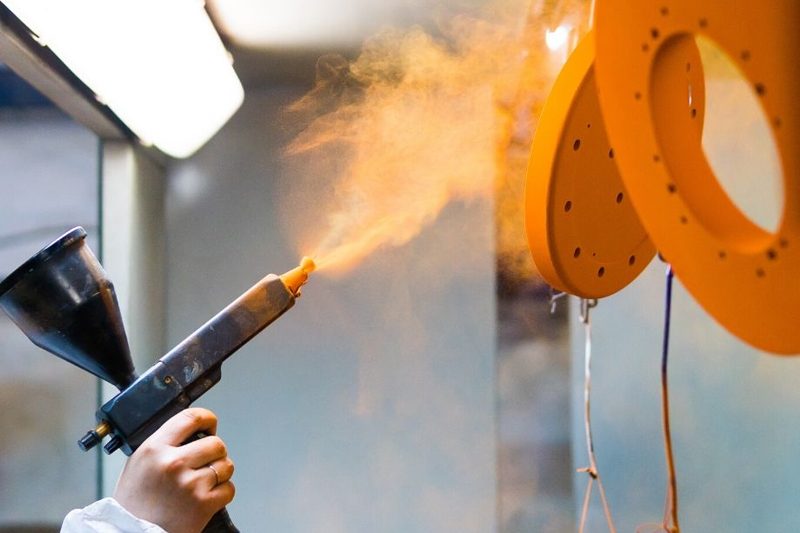
What the fans do here
Painting, powder coating and galvanising lines exhaust solvent vapour, overspray and acid fume. Booth exhaust fans in stainless steel or FRP feed wet scrubbers or adsorption towers, ovens use hot air fans, and pickling tanks need fume extraction with mist eliminators.
Applications in this industry
| Application | What it does | Type usually selected |
|---|---|---|
| Fume Exhaust System | Hoods, ducting and an exhaust fan that capture fume at source and deliver it to a scrubber, bag filter or stack. Fan material follows the fume: stainless steel, PP-FRP or rubber lined where it is corrosive. | Backward inclined and radial tipped |
| Hot Air Fan | Circulates or supplies air at elevated temperature to a dryer, oven or kiln. Selected at the hot density with the shaft and bearing arrangement built for continuous hot running. | Backward curved and backward inclined |
| Mist Eliminator | Separates entrained liquid droplets from a vapour or gas stream, ahead of a compressor, a fan or a stack. | Demister Knockdown Vessel |
| Ventilation Fan | Moves air through a plant or building for fresh air supply, heat removal and fume dilution where the system is ducted. Low pressure, long hours, so efficiency and noise set the selection. | Backward inclined and forward curved |
Processes in this industry
Hot Dip Galvanising LinesSolvent Recovery PlantsAutomotive Paint ShopsPowder Coating LinesPickling and Acid Treatment LinesBlasting and Painting Halls
Equipment supplied
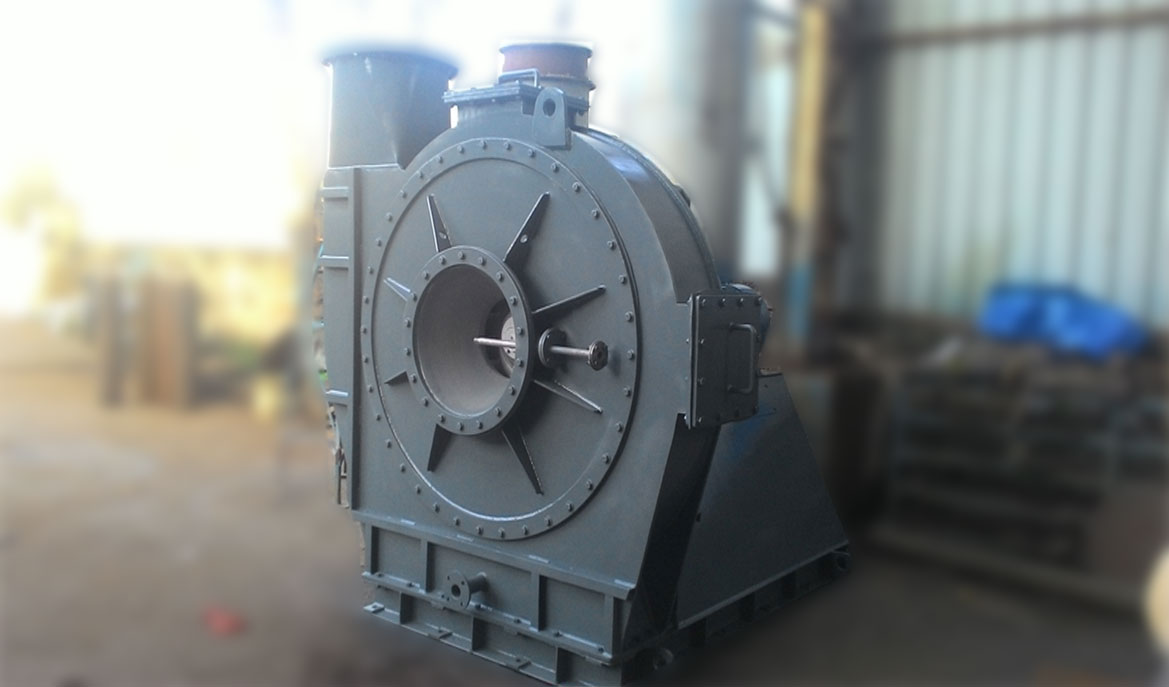
Centrifugal Fans
0.3 to 120 m³/s, 25 to 3120 mmWC single stage. Six blade configurations, three drive arrangements.
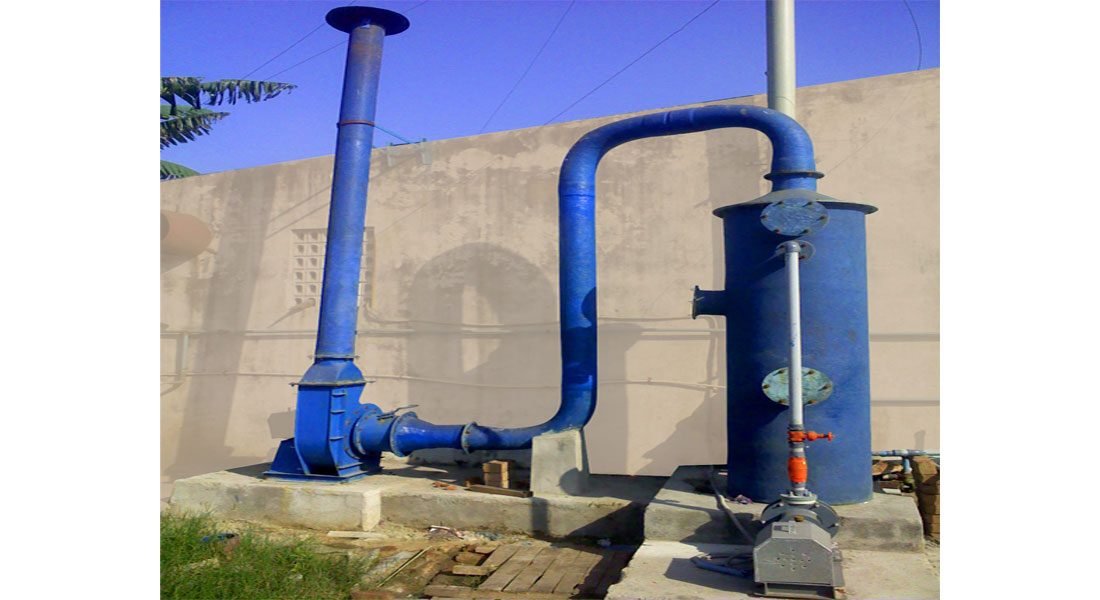
Wet Scrubber
Static, spray tower, packed bed, venturi and cyclonic spray types. Efficiency to 99.9% down to 5 micron.
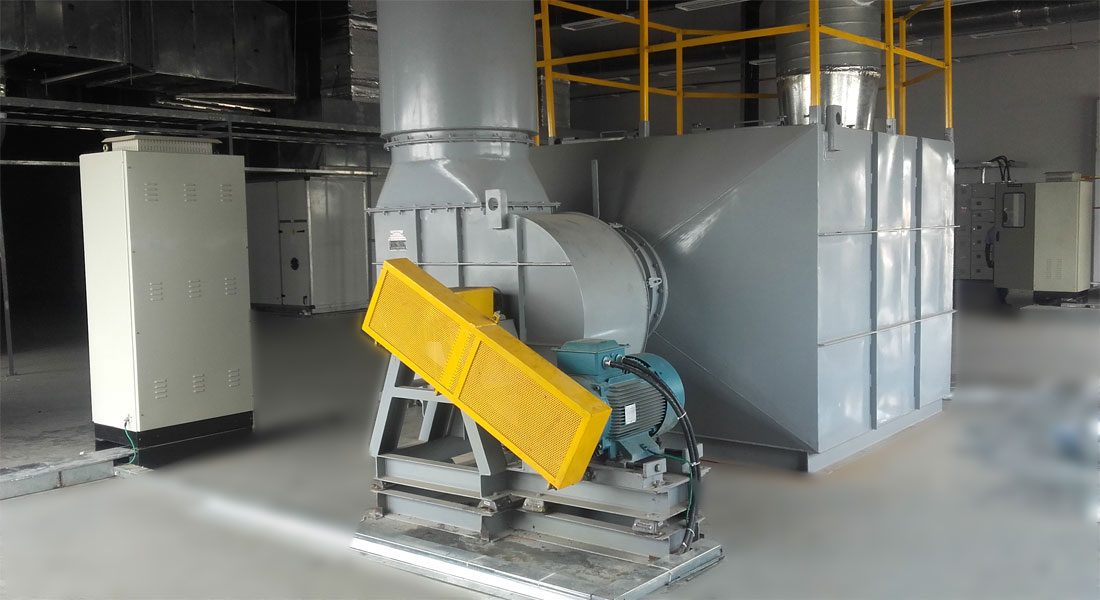
Adsorption Tower
Activated carbon towers for solvent, VOC and odour removal.
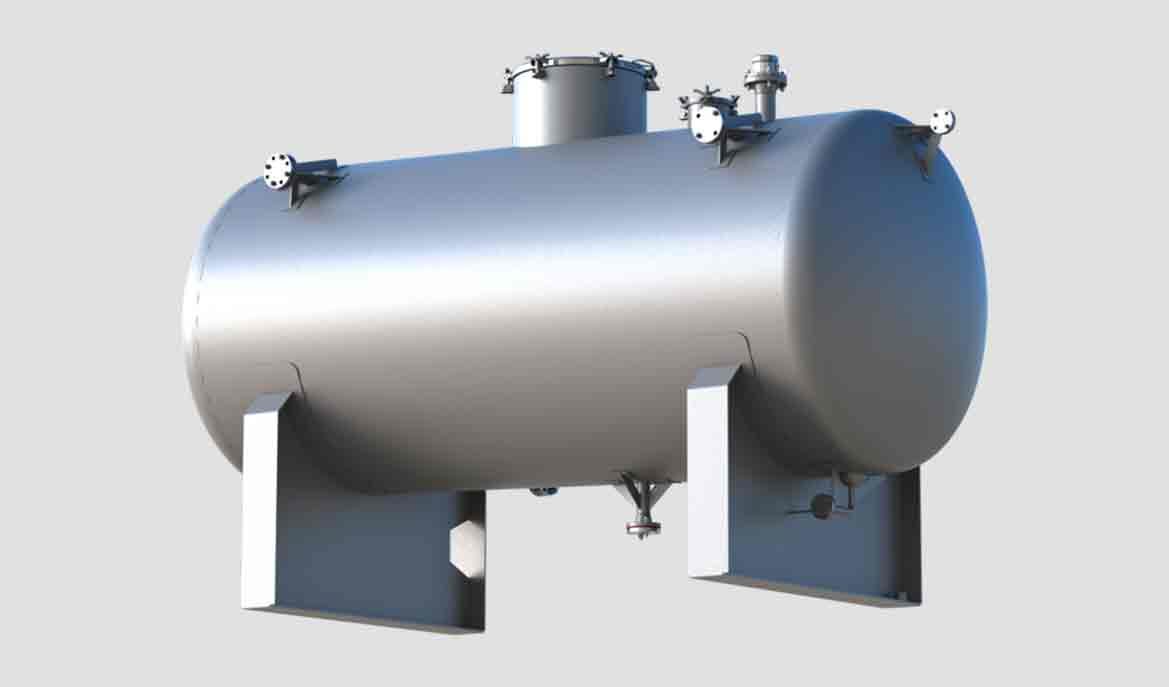
Demister Knockdown Vessel
Vertical or horizontal vessels to separate liquid from a two-phase vapour stream.
Information needed to select or quote
- Duty point. Volume flow and static pressure at the fan inlet, with the gas density and temperature or the conditions to derive it.
- Operating conditions. Site altitude, normal operating temperature and continuous or intermittent duty.
- Gas stream. Dust loading and particle size, corrosive species, moisture, upset temperature and any tendency of the material to deposit on the impeller.
- Mechanical. Rotation viewed from the drive end, discharge orientation and motor power.