
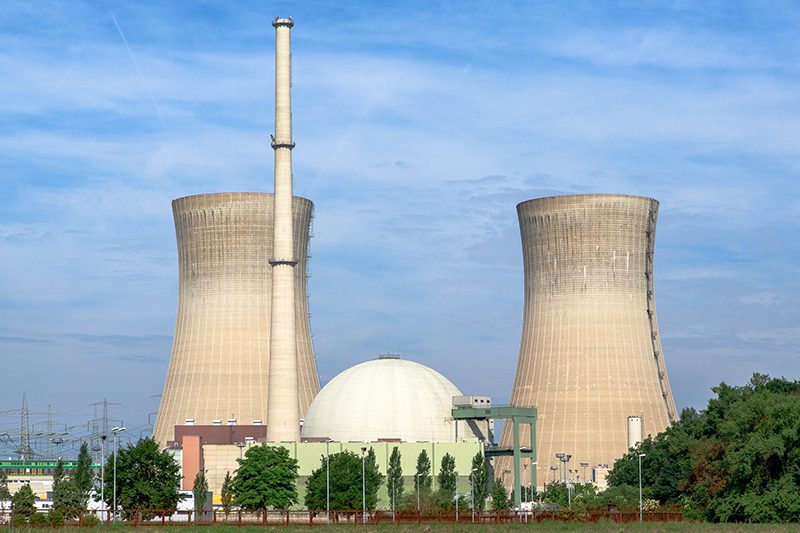
What the fans do here
Nuclear facilities use ventilation systems that hold the building under controlled negative pressure, with HEPA-filtered exhaust and AHUs on the supply side. Fans are specified for reliability and for filtration efficiency rather than for dust or heat.
Applications in this industry
| Application | What it does | Type usually selected |
|---|---|---|
| HVAC | Supply, return and exhaust fans for heating, ventilation and air conditioning of plant and office space. Low pressure, so efficiency and noise govern. | Axial, backward inclined and forward curved |
| AHU | A packaged unit with fan, filters, cooling or heating coil and mixing box that conditions and delivers supply air. Pre, fine and HEPA filters as the air quality requires. | Backward curved and forward curved |
| Ventilation Fan | Moves air through a plant or building for fresh air supply, heat removal and fume dilution where the system is ducted. Low pressure, long hours, so efficiency and noise set the selection. | Backward inclined and forward curved |
| Fan Silencer | An absorptive silencer at the fan inlet, outlet or in the duct, cutting fan noise with minimum pressure loss. | Silencer |
Processes in this industry
Car Parks and TunnelsNuclear Facility VentilationHospitals and LaboratoriesData Centres and Equipment Rooms
Equipment supplied
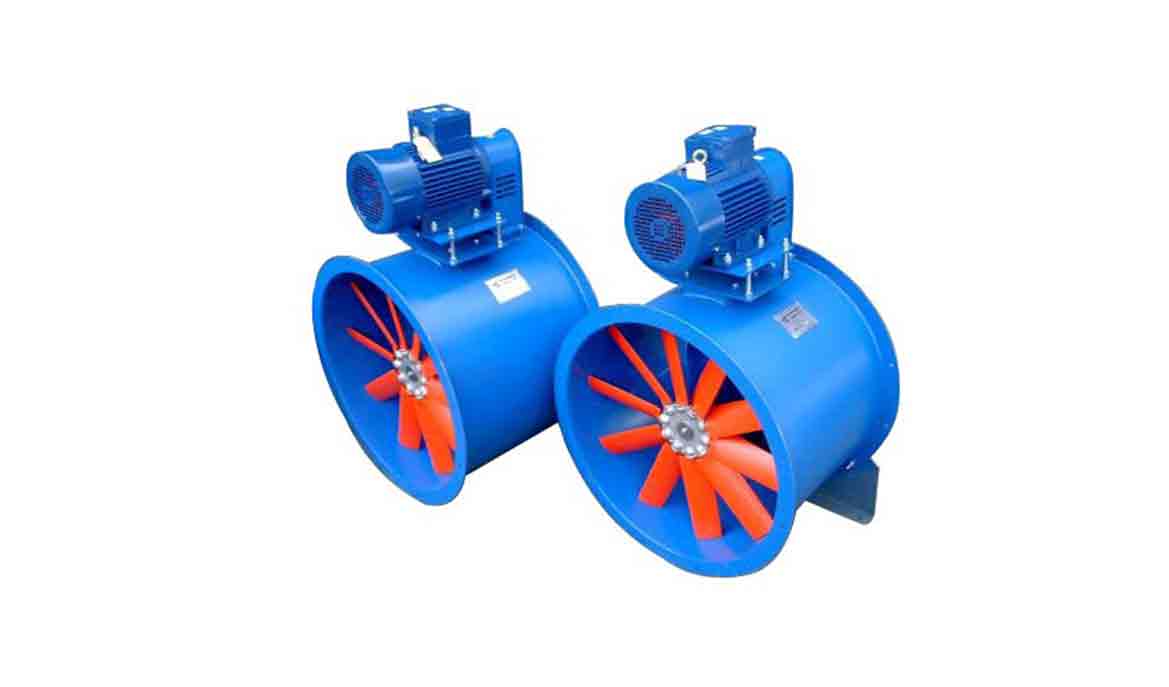
Axial Fans
0.3 to 70 m³/s, 3 to 75 mmWC. Direct drive, belt drive and bifurcated. Fixed or variable pitch impellers.
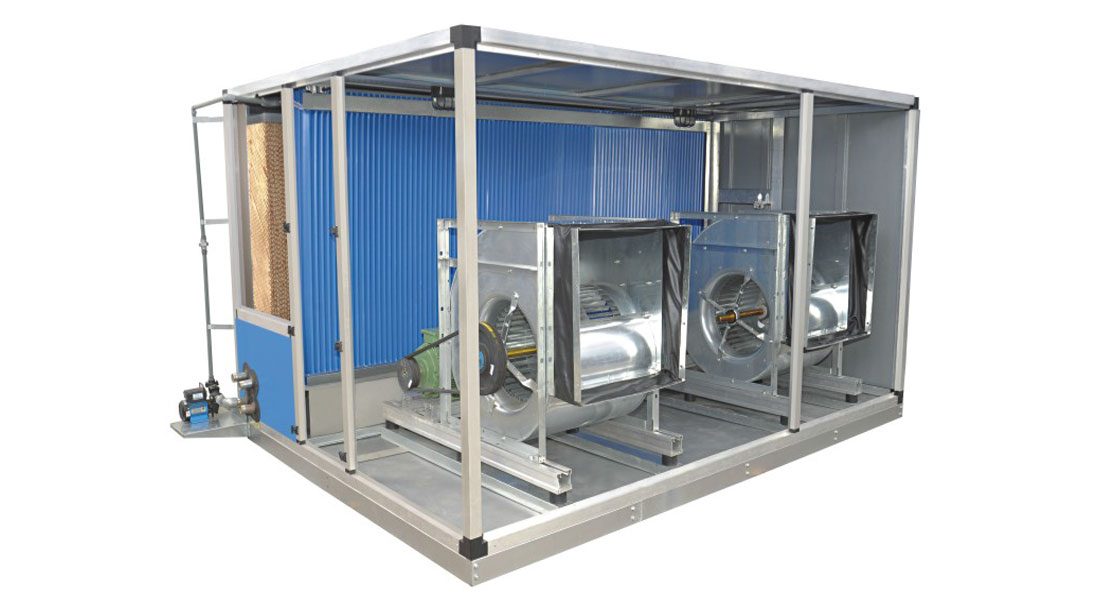
Ventilation System
Supply and exhaust ventilation, evaporative cooling, roof extractors, jet fans and air distribution.
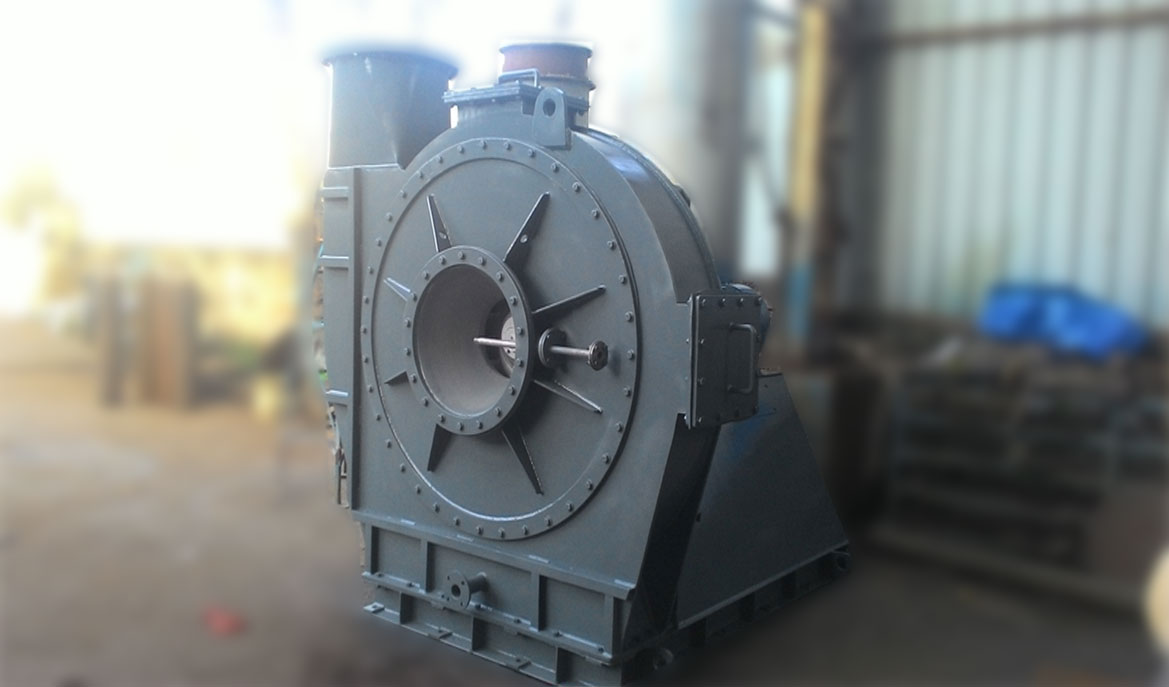
Centrifugal Fans
0.3 to 120 m³/s, 25 to 3120 mmWC single stage. Six blade configurations, three drive arrangements.
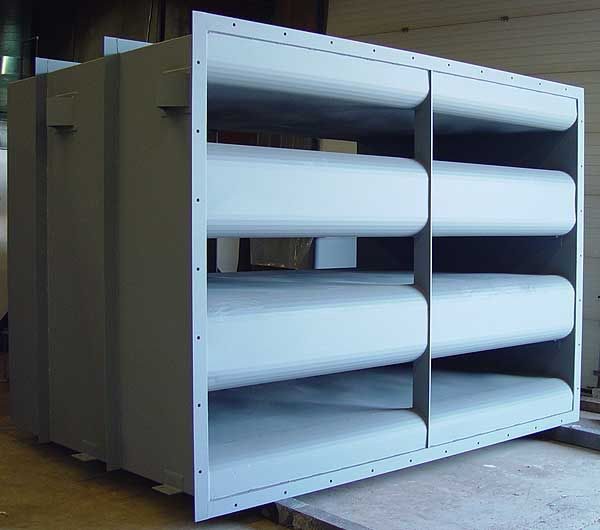
Silencer
Fan silencers for inlet, outlet and duct. Vent silencers for steam and gas blow-down.
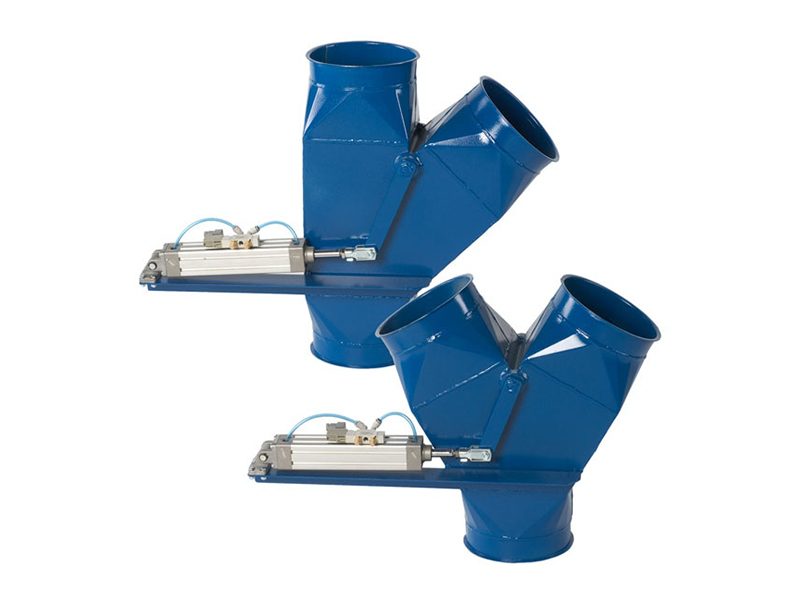
Dampers
Butterfly, multi louver, inlet vane, diverter and guillotine dampers in MS and stainless steel.
Information needed to select or quote
- Duty point. Volume flow and static pressure at the fan inlet, with the gas density and temperature or the conditions to derive it.
- Operating conditions. Site altitude, normal operating temperature and continuous or intermittent duty.
- Gas stream. Dust loading and particle size, corrosive species, moisture, upset temperature and any tendency of the material to deposit on the impeller.
- Mechanical. Rotation viewed from the drive end, discharge orientation and motor power.